
Weathering Steel: Low or High Maintenance?
Weathering steel is frequently used as a material for public artworks. But is it as low maintenance as you think it is?
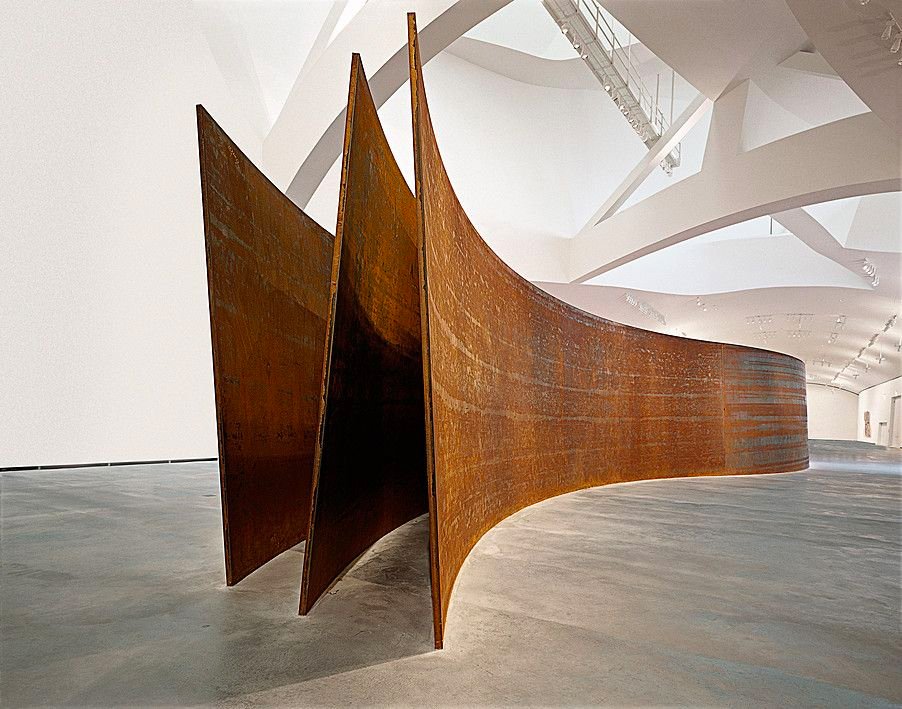
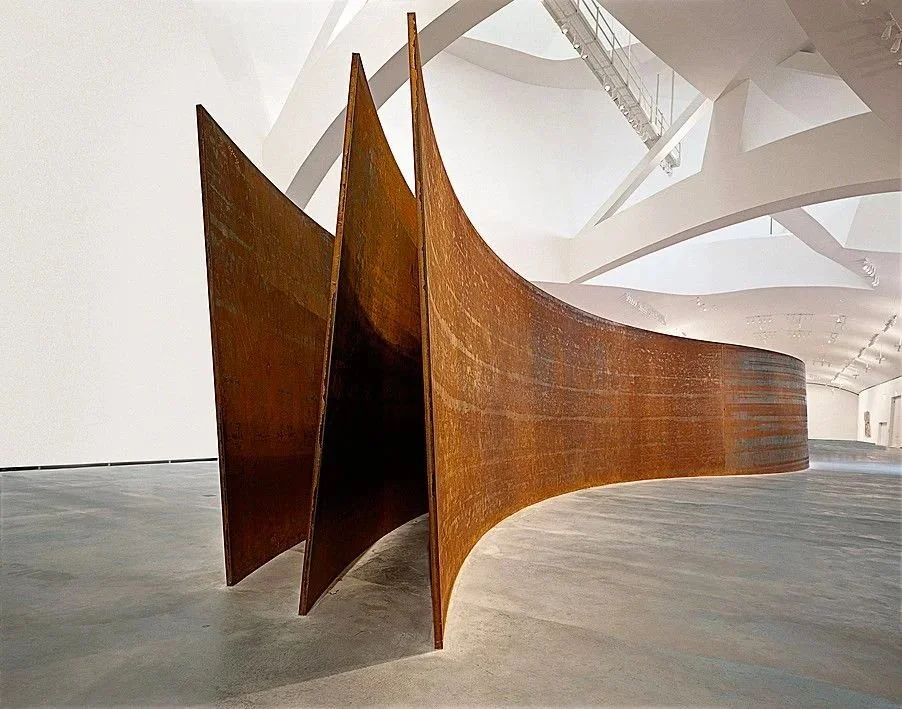
Richard Serra, Snake, 1997. Displayed at Guggenheim Museum, Bilbao. Photograph by nlinh.
Weathering steel is a very popular material used in outdoor artworks and as architectural elements due to its advertised low-maintenance characteristics and its beauty as the surface matures. But what is weathering steel, what can damage such a low-maintenance material, and how do you care for weathering steel artworks?
What is Weathering Steel?
The term “weathering steel” is used to describe “low alloy” steel, containing less than .02% carbon with additional copper, chromium, nickel, phosphorus, silicon, and manganese. The additional metals help the steel form a slowly developing, stable patina “crust” on the surface of the steel when it is exposed to cyclical wet/dry cycles. This crust begins as a thin, powdery orange surface, and matures to a thicker, deep purple-brown patina. High sulfur and phosphorus environments, such as polluted city streets, can actually help in the formation of a well-adhered, stable patina. Weathering steel is also commonly advertised as being “self-healing”, as it is able to form new stable patina crusts if the surface is damaged or lost. Because of this, outdoor city parks and streets are preferrable locations to display these materials, so that they can be exposed to the conditions that facilitate the creation of the characteristic patina.
Weathering steel is different from other popular steel and iron based metals in their alloy compositions. More reactive metals, such as cast iron, have a higher carbon content in order to increase the strength of the metal, while less reactive metals, such as stainless steel, have chromium and manganese added to the alloy to decrease the reactivity of the iron to moisture and salt ions that cause three-dimensional rust. Weathering steel has lower carbon composition than the other common iron alloys, contributing to more reactive iron ions, with an increased copper amount of other metal and non-metal additions to assist in the development and adhesion of the patina.
If you are reading this post, you have most likely heard of the term Corten or Cor-Ten Steel. Corten Steel is a registered trademark name to describe a weathering steel alloy developed by U.S. Steel. Famously, the artist Beverly Pepper worked extensively with U.S. Steel in the development of Corten Steel for the use in her outdoor steel sculptures. Many other well known modern/contemporary artists focus on the use of weathering steel in the production of their artworks such as Richard Serra (see photo above), Charles Ginnever, Eduardo Chillida, and Antony Gormley. There are other proprietary weathering steel alloys with slightly different compositions, strength, corrosion resistance, and grain structure ratings including PATINAX and assorted European standards steels (e.g. S355 J0WP).

Anthony Gormley, Angel of the North, 1998. Gateshead, UK. Photo by Gordon Ball LRPS
Is Weathering Steel as Low-Maintenance as It Seems?
Just because a material advertises itself as “low-maintenance”, that does not mean that it is “no-maintenance”. Like any other man-made material, weathering steel is subject to deterioration and instability if it is exposed to the right conditions. While the corrosion/patina layer is much more stable and aesthetically pleasing than standard three-dimensional rust (i.e. ferric oxide), the patina can be damaged and lost if it does not go through the regular wet/dry cycle or is exposed to contaminants that can affect the patina’s surface adhesion.
So what are the most common damaging agents affecting weathering steel public artworks?
Bird droppings, water, and people.
Bird droppings are a difficult contaminant to prevent, given birds’ love of perching on sculptures. However, prolonged contact with acidic bird droppings can lead to loss of the underlying patina layer. While the patina is “self-healing”, the newly formed patina is bright orange and remains so for multiple years, and can therefore be visually distracting while it matures. If birds continue to roost in the same places, the patina will continue to reform new patina, leading to long-term, uneven, orange patina crust.
While water helps form the weathering steel patina, it can also be its downfall. It is important to note that the surface has to undergo wet AND dry periods to develop the patina. If the surface is never touched by water, the patina will remain thin, orange, and powdery. If the surface is constantly exposed to moisture, the corrosion crust will lose its stability and begin sloughing off sheets of steel corrosion. Constant water exposure is much more structurally damaging than constant dry, and is frequently caused by below-ground mounting and boggy ground.
Finally, people can be a significant damaging agent for weathering steel. While public art is meant to inspire public interaction and enjoyment, the more damaging interactions like climbing and graffiti can affect patina development and loss. Climbing can burnish the patina or result in surface loss, while spray paint and sticker graffiti can prevent moisture from reaching the surface or from evaporating from the surface, resulting in inconsistent patina development.
How Should I Care for Weathering Steel?
Like any other outdoor sculpture, weathering steel should undergo regular maintenances in order to help develop the patina layer and remove any damaging contaminants. While an annual maintenance is often sufficient if it regularly is subjected cyclical rain, weathering steel in areas with constant moisture or minimal rain may need more frequent cleanings in order to mimic the wet/dry cycles that develop the protective patina crust.
Interested in learning more about how to care for weathering steel in your collection?
Further reading on weathering steel at https://www.azom.com/article.aspx?ArticleID=12974